Who is Donnie Yen? See Net-worth, Quote, Awards, Fact, Wiki
Table of Contents
Donnie Yen Wiki Biography
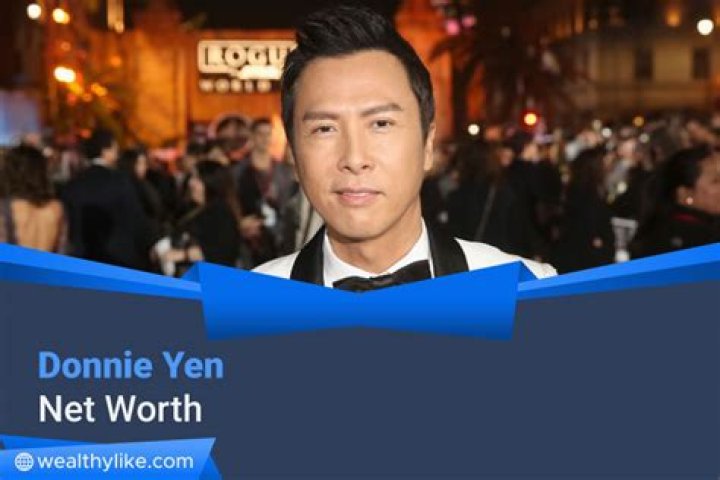
Donnie Yen, born on the 27th of July, 1963, is a Chinese actor, martial artist, director, producer and choreographer, probably best known for his series of films “Ip Man”.
So how much is Yen’s net worth? As of early 2016, it is reported to be over $40 million, gained mostly from his long career both in front of and behind the camera, from acting to choreographing fight scenes.
Donnie Yen Net Worth $40 Million Dollars
Born in Guangzhou, Guangdong, China, Yen is the son of Bow-Sim Mark and Kluster Yen. At the age of two, his family moved to Hong Kong, until finally when he was twelve, they settled in Boston, Massachusetts in the United States. Due to his mother’s influence – she is a Tai Chi grandmaster – Yen took an interest in learning the art and other forms and styles as well. Yen took a special interest in Wushu, and would spent most of his time in the Boston Combat Zone. His parents then sent him to Beijing, China for a two-year training program in the Beijing Wushu Team, for him to avoid being included in gang violence and so that he could focus on his art.
After his training in China, en route to the United States, Yen made a stopover in Hong Kong where he met Yuen Woo-ping who would introduce him to the world of movies. Yuen is an action choreographer and director who helped Yen to do some screen tests, and he ended up being cast to some films.
In 1984, Yen debuted in the movie “Drunken Tai Chi”, but his breakthrough movie was in the film “Once Upon a Time in China II” in which he starred opposite another martial artist Jet Li. Their well choreographed fight scenes became a huge hit among fans, and gained a cult following. Yen later made a series of successful films including “Iron Monkey”, “Legend of the Wolf” and “Ballistic Kiss”, the last two under his own production company, Bullet Films. His early years of independent film-making certainly helped in his net worth.
Because of his natural talent in martial arts, Yen was invited to choreograph fight scenes in Hollywood films, including in “Highlander: Endgame” and “Blade II”, in which he also made guest appearances. He returned to Hong Kong and starred in films like ‘Seven Swords”, “SPL: Shao Po Lang” and “Dragon Tiger Gate” to name a few, but in 2008, his film “Ip Man”, became a huge hit not only in Hong Kong and China but around the world. The success of the film spawned two sequels and helped tremendously in growing Yen’s wealth.
Today, Yen has made over 60 films and is reported to soon star in much anticipated films like “Crouching Tiger, Hidden Dragon: Sword of Destiny” and “XXX: The Return of Xander Cage”.
In terms of his personal life, Yen was married before to Jowan Leung Sing-Si in 1994, but the marriage only lasted a year; together they have one son. In 2003, he married Cecilia Wang and they have two children, Jasmine and James.
Net Worth
$40 Million
Date Of Birth
July 27, 1963
Died
591 AD
Place Of Birth
Yuexiu District, China
Height
5 ft 8 in (1.75 m)
Profession
Film Director, Actor, Film Producer, Martial Artist, Screenwriter, Performer, Action Director
Education
Boston Combat Zone, Beijing Wushu Team
Nationality
Hong Kong, Chinese
Spouse
Cissy Wang (m. 2003), Zing-Ci Leung (m. 1993–1995)
Children
Man-Zeok Yen, Jasmine Yen, James Yen
Parents
Bow-Sim Mark, Kluster Yen
Siblings
Chris Yen
Nicknames
Donnie Yen Ji-Dan , Zhen Zidan , Zidan Zhen , Chi-Tan Yen , Yan Che Dan , Yen Chi Tan , Michael Ryan , Donnie Yen Chi Tan , Ji-Dan Yen , Yen Ji Dan
Facebook
Twitter
Instagram
IMDB
Awards
Academy Awards for the Best Foreign Language Film Oscar (2003), Hong Kong Film Award for Best Action Choreography, Golden Horse Awards for the Best Action Choreography, Beijing College Student Film Festival (2009), Taurus World Stunt Awards, Huabiao Film Award for the Best Actor (2009), The 3rd Mac…
Record Labels
“Bullet Films”
Nominations
6th Degree Black Belt in Taekwondo, Black Belt in Judo, Purple Belt in Brazilian Jiu-Jitsu, Gold Medals in Wushu
Movies
“Onimusha 3”, “Drunken Tai Chi”, “Once Upon a Time in China II”, “Iron Monkey”, “Legend of the Wolf”, “Ballistic Kiss”, “Legend of the Wolf” (1997), “Legend of the Fist: The Return of Chen Zhen” (2010), “Dragon Tiger Gate”, “Flash Point” (2007), “The Expendables 2” (2011), “The …
TV Shows
The Kung Fu Master, Fei Fu Kwan Ying, Mo Min Kap Sin Fung, The Crime File, The New Life
Trademark
1
Some of his films shows him sitting on antagonists’ bodies after beating them up.
2
Likes to kick away objects either off ground or in the air during his fight scenes.
3
Uses slow-motion for certain takes during his fight scenes to showcase the power of techniques done by actors he works with.
4
Frequently collaborates with Woo-Ping Yuen.
5
Started utilizing MMA in his fight scenes more often after making SPL: Sha po lang (2005). This can be seen in all of his contemporary action films that followed suit.
6
Usually makes soft “o-faces” during his fight scenes, similar to Bruce Lee’s facial expression doing the famous high-pitched battle scream.
7
Includes parkour in between his fight scenes.
8
His characters – whenever he’s playing lead or co-lead roles – are often given late introductions in the beginning of his films.
9
His fight scenes often involve people hitting each other’s fists and kicks at the same time, or each other one after another.
10
Started utilizing the “chain punching” technique more often in some of his recent films after the big success of Yip Man (2008), Also likes to execute few other punching techniques in his fight scenes, such as “wind-up”- and “superman” punches.
11
Frequently collaborates with Wilson Yip
12
Prefers to work with real martial artists in his films. His collaborations range from well-established practitioners such as Jet Li, Collin Chou, Jing Wu, Xing Yu, and Siu-Wong Fan to experienced fighters like John Salvitti, Michael Woods and Cung Le.
13
Likes to execute various kicking techniques – including jumping splits-kick, jumping front-kick, jumping back-kick while running forward and chain-kicks while moving forward
14
Known for playing tough and impulsive characters in his films.
15
Likes to choreograph realistic, creative and unconventional fight scenes
Quote
1
(On the difference of working in Hong Kong and overseas) Two big differences: time and money! Actually, time, because you can give me all the money in the world and, if I don’t have enough time, I can’t give you a great action scene. The big difference in Asia is that the action director has complete control over that aspect of the film, from concept to shooting to editing. The Hollywood system is much more organized, and you have to deal with all these different producers etc. In some ways, that can be good. The development of scripts and the overall preparation for a film is definitely better in Hollywood. We have to try and bring the best from east and west together.
2
(On the action choreography of Dou fo sin (2007)) The real challenge was in meeting my own expectations. I have such huge respect for MMA fighters, and I was determined that we should make every effort to present their art cinematically, without compromising on the techniques and “reality” of what they do. I underwent MMA training, I watched hours of fight footage and, in the end, I think we came close to capturing the MMA flavor in our fight scenes. The biggest challenge, for me was doing repeated takes of the movements that I choreographed for myself. Sometimes it really did feel like I’d been in a real fight!
3
(On the difference of working as action director in Hong Kong and Hollywood) I think it’s a difference between the way action is treated in Hong Kong and in Hollywood. In Hong Kong, my job is to “direct” the action, and when I’m shooting the fight sequences, I take over the set. I choose the camera angles and see how the drama intercuts with the action. In Hollywood, you “choreograph” working with the main director. In the old days of Hong Kong action cinema, when the action director worked, the “drama” director went home!
4
(On working overseas again) Anything goes! With the right project, right script I’ll do it! But you can only make so many films a year; you have to choose the one that you want to make!
5
(On exploring different movie roles outside MA movies) Yes, if someone wants to hire me, why not? Why not get paid the same and have less of a physical demand? But I would absolutely not stop. It’s great to do martial arts films, and rep martial arts films, and be a successful icon, and set trends. I feel it’s an honor to set a trend in the martial arts film world.
6
(On working locally and overseas) I don’t identify a project as a Hong Kong project or a Hollywood project or whatever. The world’s getting closer and closer. Who would think that “Crouching Tiger” would win an Oscar as Best Foreign Film? If the film is a good film, it will be seen by the world. I don’t know where my home is. If it requires me to do a production in Europe, I go to Europe. If it’s in Asian countries, I’ll be in Asian countries.
7
(On working with Jet Li) Ten years ago we did a film called “Once Upon A Time In China, Part II” and it raised the bar of martial arts standard and I was nominated as best supporting actor. “Hero” was a 10-year reunion for us. So we came in as a kind of expectation from the fans. The difference between the two times is the first time we had a rivalry going because I guess we were younger and it was our first time working with each other. But this time was more of a collaboration. We just wanted to make the best action sequence ever.
8
When you watch my films, you’re feeling my heart.
9
(On martial arts training) Music and movement are both expressions of the same basic human energy. They are like paints used to color the screen.
10
(On changing generic fight choreography) Nowadays, martial arts directors go along with the advancement in filming techniques. We can use some techniques to coordinate with non-martial artists. In my early days with Yuen Wo Ping, technology was rather backward, whatever we did depended on the raw skills of the actors themselves; but the actors nowadays are exceptionally fortunate. They could rely on editing, doubles, wires, and even special effects to make them look like they could fight well. But I believe, now that the audiences seek authenticity in martial arts, they could be cast aside. That’s why we are looking into real combat.
11
(On learning from veteran Hong Kong action directors) Of course it’s Yuen Wo Ping. He brought me into the circle. Some of his filming techniques and styles bear great influence on me. Actually, I admire the techniques of other martial arts directors too; they have their own unique ways of handling action scenes. I hope to learn from them. This is my pursuit of martial arts all along – mixed martial arts.
12
(On the inspiration of becoming a director) I have always been a rebel, in my whole entire life, since I was just a martial artist. I always have questions in the back of my mind. Why does it have to be this way? Can it be that way? I always try to question and challenge that system and I guess that kind of attitude I brought into the film industry when I was just an actor. I see different films; I see how a director or choreographer would choreograph it. And I say to myself “it can be improved, it can be better and in less time”. Or I’d wonder “how come this film is a good film and the other one a bad film, when the budget is not much different?” There are certain techniques, a certain system. When I was an action choreographer, when I used to work for Yuen Woo Ping, I used to grab a whole team of people and just raise questions. To the photographer, or to Yuen Woo Ping: “could it be that way? Could be it, be that? Why not try it this way?” Very soon, I established a kind of trust from Yuen Woo Ping, because I made a lot of his films happen with my suggestions.
Fact
1
Donnie Yen was intended to be the lead actor for Another Meltdown (1998), Yuen chi mo hei (1999) and Sang sei kuen chuk (2000). But Donnie gave back the deposit money he was given by Jing Wong and worked on Chin Long Chuen Suet (1997), Sun Tong San Tai Hing (1998), Sat Sat Yan, Tiu Tiu Mo (1998) and Der Puma – Kämpfer mit Herz (1999) instead. Jing replaced him with Wenzhuo Zhao.
2
Is credited as the first martial arts actor/action director to incorporate modern MMA in Asian action cinema, starting with Vampire Effect (2003) and followed by SPL: Sha po lang (2005), Dou fo sin (2007), and Te shu shen fen (2013).
3
Got into a feud with his mentor, Woo-Ping Yuen, during shooting of Wing Chun (1994). While the incident was officially never explained, some people believe it was creative differences over the fight choreography that caused them to part ways. However, Woo Ping revealed in a 2011 interview that their relationship is good now and they still keep in touch from time to time.
4
Was part of a Chinatown gang (non-organized street gang) in Boston, MA, in his early years. Due to his profound background in practical martial arts, he had a reputation as a street brawler. While Yen’s degree/mastery of overall fighting ability is unknown, there’s one reported occasion that confirms him being an efficient martial artist/self-defender. According to news reports by Hong Kong news channels in the late 1990s, he went clubbing with his then girlfriend, Yee-Man Man, and once inside the nightclub his girlfriend got harassed by a troublesome gang who took an interest in her. Yen warned them of leaving them alone but to no success. As they got out, the gang followed them and proceeded to prevent Yen from intervening by attacking him. This resulted in Yen beating the assailants up in self-defense and getting arrested by the police but was released the next day. This incident is still known in Hong Kong to this day – with people bringing it up in discussions concerning real fights as well as in relation to comparing credible fighting skills of various Hong Kong martial arts actors.
5
Cites Jet Li as his favorite among all martial arts actors he has worked with in his entire career.
6
After more than two decades of working in Hong Kong, Yen finally got his major breakthrough in Yip Man (2008) and started being offered various big-budget projects by famous producers and directors in China and USA.
7
Started working overseas as action director and small part actor on various film projects in early 2000s, in hope to learn more about film-making from different film markets and to achieve international success as an actor.
8
After learning the Hong Kong style of action film-making from his mentor Woo-Ping Yuen, Yen developed a big interest in action choreographing fight scenes and started working behind the camera on various film projects in Hong Kong in mid 1990s.
9
Started collaborating with director Wilson Yip on various film projects as leading actor and action director in the mid 2000s after meeting each other in the late 1990s. Yen was asked a favor by Yip to help out Daniel Lee with coordinating action scenes for Sing yuet tung wa (1999). Their collaborations have led to some of the finest Hong Kong action films made in last half of that decade.
10
Started working on TV series in Hong Kong after offers for feature films slowly began diminishing for him in the mid 1990s.
11
Donnie Yen received the Star Asia Award before the screening of Dragon (2011) at the New York Asian Film Festival on Monday, July 9, 2012.
12
Turned down the following Hollywood films: Rush Hour 2 (2001) (Ricky Tan), Lara Croft Tomb Raider: The Cradle of Life (2003) (Chen Lo), The Forbidden Kingdom (2008) (Jade Warlord), The Mummy: Tomb of the Dragon Emperor (2008) (Emperor Han), The Expendables 2 (2012) (Nan Yu’s character originally a male character replacing Yin Yang), and The Man with the Iron Fists (2012) (Poison Dagger).
13
Was recommended to Yimou Zhang by Jet Li to play the role of Sky in Ying xiong (2002). Zimou was desperate to look for a new actor to play the role after the original actor of choice was dismissed.
14
Can also understand Shanghainese, because his wife’s family is Shanghainese.
15
Newborn son (2007) named James W. Yen.
16
Daughter (2004) named Jasmine W. Yen.
17
A former member of Woo-Ping Yuen’s Yuen Clan stunt team.
18
Turned down the role of the main villain in both Tai-Chi Master (1993) and The Legend of Drunken Master (1994) eventually played by Siu-Ho Chin and Ken Lo respectively.
19
Michelle Yeoh considers him to be the fastest martial artist she has ever worked with.
20
Was supposed to co-star with Brandon Lee in a sequel to Legacy of Rage (1986) but Lee’s departure back to the States led to the idea being scrapped.
21
Well trained in various martial arts styles, including wushu, tae kwon do, kick-boxing and boxing.
22
Has a huge fanbase in Japan which has given him some opportunities to work behind the camera on not only movies but popular video games as well. He directed the cinematic intro sequence of Onimusha 3: Demon Siege (2004).
23
A big fan of Bruce Lee. He was one of the auditionees for the title role in Dragon: The Bruce Lee Story (1993). Jing wu men (1995) and Jing wu feng yun: Chen Zhen (2010) are dedicated to Lee.
24
Sustained a heavy injury in his right shoulder while making Ching fung dik sau (1985) which still affects him to this day.
25
Was sent to Beijing, China, to continue his martial arts training and avoid committing crimes with a street gang.
26
Has a son from a previous marriage.
27
His current wife Cissy Wang is 18 years his junior.
28
Current wife Cissy Wang was the winner of the Miss Chinese Toronto Pageant 2000. She also represented Toronto in 2001 for the Miss Chinese International Pageant.
29
Brother of Chris Yen.
30
Can speak fluent Cantonese, English and Mandarin. Can also speak casual Korean, since he learned it as a requirement for his character during the filming of Qi jian (2005).
31
Billed as Michael Ryan in his earlier films, until Ah sau ging gat: Si gou aat sin (1994), released in the Philippines.
32
Classically trained pianist
33
Grew up in Boston, Massachusetts, USA.
Actor
Title
Year
Status
Character
Hak Mui Gwai yee git gam lan
1997
Boxing School Owner
666: Mo gui fu huo
1996
Mo Ti Nam
Jie tou sha shou
1996
Iron Monkey
Dou sing 2: Kai tau dou sing
1995
Lone Seven
Jing wu men
1995
TV Series
Chen Zhen
Ah sau ging gat: Si gou aat sin
1994
Chiang Ho-Wa
Ma hei siu chi
1994
Danton Lee (as Yin Sze Dan)
Wing Chun
1994
Leung Pok To (as Yen Chi Tan)
Hung Hei Gun
1994
TV Series
Hung Hei-Kwun (1994)
So Hak-Yee
1993
Beggar So Chan
Siu nin Wong Fei Hung chi: Tit ma lau
1993
Wong Kei-Ying
San lau sing woo dip gim
1993
Yip Cheung
Sun lung moon hak chan
1992
Eunuch Tsao Siu Yan
Wong Fei Hung II: Nam yee tung chi keung
1992
Commander Lan
Revenge of the Cheetah
1992
Ronald
The Holy Virgin vs. the Evil Dead
1991
Shiang Chi-Fei
Kon Tam Kwan Ying
1991
TV Series
Wong Wai-Sek (1991)
Ming Wan Mai Kung
1991
TV Series
Chung Ka-Jun (1991)
No foh wai lung
1991
Chin Chi Leung
Sai hak chin
1990
Dragon Yau
Fei Fu Kwan Ying
1989
TV Series
Cheung Ho Nam (1989)
Wong Ka Si Sei IV: Sik Gik Sing Yan
1989
Officer Donny Yan
Mo Min Kap Sin Fung
1989
TV Series
Tse Kwok-Tung (1989)
Dak ging to lung
1988
Terry
Ying ging boon sik
1988
TV Movie
Dick Kwan
Ching fung dik sau
1985
Eddie
Siu Tai Gik
1984
Chan Chuen Chung
Yip Man 4
2018
announced
Ip Man
American Revenge
2017
announced
Chui Lung
2017
post-production
Crippled Ho
Iceman 2
2017
completed
Ho Ying
xXx: Return of Xander Cage
2017
Xiang
Rogue One
2016
Chirrut Îmwe
The Monkey King: The Legend Begins
2016
Sun Wukong Monkey King
Crouching Tiger, Hidden Dragon: Sword of Destiny
2016
Silent Wolf
Yip Man 3
2015
Ip Man
San Taam Ka To
2015
Band Member
Nature Is Speaking
2014
TV Series short
Shanhu Jiao / Saan Wu Ziu
Yi ge ren de wu lin
2014
Hahou Mo
Bing feng: Chong sheng zhi men
2014
Ho Ying
Gam gai SSS
2014
Yip Man
Xi you ji: Da nao tian gong
2014
Sun Wukong Monkey King
Te shu shen fen
2013
Chan Chi-Lung / Dragon
Soi yat hei
2013
Mr. Cool
Baat seng bou hei
2012
Carl Tam
Dragon
2011
Liu Jin-Xi
The Lost Bladesman
2011
Guan Yu
Ji keung hei si 2011
2011
Arnold Cheng
Jing wu feng yun: Chen Zhen
2010
Chen Zhen
Ip Man 2
2010
Ip Man
Jin yi wei
2010
Qinglong
Shi yue wei cheng
2009
Sum Chung-Yang
Jian guo da ye
2009
Tian Han
Ga yau hei si 2009
2009
Wedding guest
Yip Man
2008
Ip Man
Hua pi
2008
Pang Yong
Jiang shan mei ren
2008
Muyong Xuehu
Dou fo sin
2007
Ma
Lung Fu Moon
2006
Dragon Wong
SPL: Sha po lang
2005
Ma Kwan
Qi jian
2005
Chu Zhaonan
Chin gei bin 2: Fa tou tai kam
2004
General Lone
Luen Ching Go Gup
2004
Victor Tsui
Shanghai Knights
2003
Wu Chow
Ying xiong
2002
Sky
Blade II
2002
Snowman
Highlander: Endgame
2000
Jin Ke
Hei Se Cheng Shi
1999
Ozone
Sun Tong San Tai Hing
1998
Tong Shan
Sat Sat Yan, Tiu Tiu Mo
1998
Cat Lee
Chin Long Chuen Suet
1997
Fung Man-Hin
Stunts
Title
Year
Status
Character
Chui Lung
2017
action director post-production
Iceman 2
2017
action director completed
xXx: Return of Xander Cage
2017
fight choreographer – uncredited
Rogue One
2016
fight choreographer – uncredited
The Monkey King: The Legend Begins
2016
action director
Yip Man 3
2015
action choreographer – uncredited
Yi ge ren de wu lin
2014
action director
Bing feng: Chong sheng zhi men
2014
action director
Xi you ji: Da nao tian gong
2014
action director
Te shu shen fen
2013
action director
Dragon
2011
action director
The Lost Bladesman
2011
action director
Jing wu feng yun: Chen Zhen
2010
action director
Ip Man 2
2010
action choreographer – uncredited
Shi yue wei cheng
2009
action director – uncredited
Yip Man
2008
action choreographer – uncredited
Dou fo sin
2007
action director
Lung Fu Moon
2006
action director
Alex Rider: Operation Stormbreaker
2006
action director / additional martial arts sequences
SPL: Sha po lang
2005
action director
Chin gei bin 2: Fa tou tai kam
2004
stunt actor – uncredited
Onimusha 3: Demon Siege
2004
Video Game stunt director: CG movies
Gin chap hak mooi gwai
2004
action director
Vampire Effect
2003
action director
Blade II
2002
fight choreographer / martial arts coordinator
The Princess Blade
2001
fight choreographer
Der Puma – Kämpfer mit Herz
TV Series stunt coordinator – 8 episodes, 2000 fight choreographer – 2 episodes, 1999 – 2000