In the 1930s, Stalin's forces slaughtered between 3 and 5 percent of the Mongolian population. Look back at the days, both gruesome and exuberant, before.
Buddhist monks in the Mongolia capital as it was over 100 years ago.
Nearly one hundred years ago, the Bolsheviks in Russia revolted. Mongolia, the cold, massive country lodged between Russia and China, had its own Communist revolution in 1921. Though Mongolia remained outside the Soviet Union, Joseph Stalin brought Mongolia heavily under Soviet influence with violent incursions into Mongolian life and politics.
During the Soviet purges in the 1930s, Stalin’s forces slaughtered between 3 and 5 percent of the entire Mongolian population. The Soviets showed particular disdain for the country’s rich Buddhist history, killing tens of thousands of monks and destroying around 2,000 monasteries and temples.
The photos in the gallery below show the world that existed before Stalin smashed it. As you’ll see, it was a world of tradition and religious exuberance, but also of cruelty and desperation. While much of Mongolian tradition survived the violence of the 20th century, much was destroyed. Through these photos, we can see shadows of what was lost.
This is the world the Soviet’s shattered.
Image source: yeeyan.orgAn orange-robed monk walks past a temple in what was called Khuree and is now Ulaanbaatar, the capital of Mongolia.
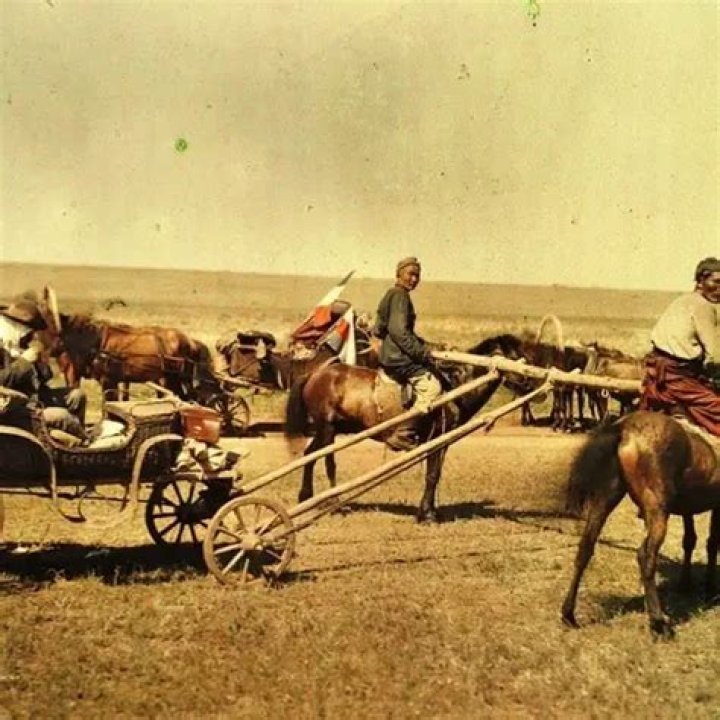
Source: wikimedia.orgThe woman in this 102-year-old photo wears traditional dress that signifies she is married and part of the Mongolian nobility. Source: wikimedia.orgMongolian riders near the Russian border in the early 20th century. Source: yeeyan.orgDespite the flourishing Buddhist monastacism, pre-Soviet Mongolia had plenty of cruelty, including this form of “portable prison.” Prisoners were sometimes left in such boxes to starve. Source: wikimedia.orgThis is a sketch of the same form of treatment included in Beatrix Bulstrode’s book A Tour in Mongolia. Though they were fed, these prisoners were condemned to life-sentences inside these four-foot-long boxes. Source: library.upenn.eduThis 1913 photo shows exactly the kind of monastery destroyed by Joseph Stalin and his forces during the purges in the 1930s. Source: wikimedia.orgBuilt in 1809, the Gandantegchinlen Monastery still stands in Ulaanbaatar, though it is now surrounded by concrete apartment blocks and office buildings. Source: wikimedia.orgThis photo, showing a street scene from 1885, comes from the scholarly papers of George Kennan, an American diplomat and Soviet scholar. Source: loc.govA Chinese governor of a northern Mongolian province holds court near the end of the 19th century. Source: loc.govA caravan of oxen drags supplies through a city street. Source: loc.govBeatrix Bulstrode, a British woman, snapped this photo of Mongolian traders during her journeys through the country between 1913 and 1919. Source: library.upenn.eduThese two riders drag a small VIP wagon behind them across the steppe. Source: yeeyan.orgThese are two Mongolian soldiers as photographed in 1913. Source: yeeyan.orgThis shot from around 1885 shows a trading post near the Mongolia-Russia border. Source: loc.govHere, on the opposite side of the country, Mongolian merchants cross into China through a gate in the great wall. Source: loc.govHere, as photographed by Beatrix Bulstrode, are Mongolian wrestlers participating in a festival one century ago. Source: library.upenn.eduThese photos from Bulstrode show rural Mongolian parents and children. Source: library.upenn.eduA Mongol bride (left) stands in front of a ger. A lama and a Mongolian prince (right) greet each other near a temple in the capital. Source: library.upenn.eduThree women pose for the camera after making offerings at a Buddhist temple outside the capital city. Source: library.upenn.eduTwo boys sit on animal skins outside of a traditional ger. Source: wikimedia.orgA tiny monk stands near a stupa, which is a holy Buddhist reliquary. Source: yeeyan.comA much older monk stands for a picture in the same location. Source: yeeyan.orgYoung monks sit on a barricade near Mongolian capital in the early 20th century. Source: library.upenn.eduMonks attending a sports festival, as photographed by Beatrix Bulstrode. Source: library.upenn.eduTwo monks sit in the open plains outside the capital.